

Preparing, preserving and staying (mostly) sane

They said you’re never too old to try something new, so I took the plunge and signed up to a veg box delivery. It’s taken me a while to wrap my head around being limited by a small selection of weekly vegetables, even the smallest box of which take a seeming age to get through in my part solo, part single parent household. And then there’s the washing of veg involved. Scrubbing mud off produce is as joyous a domestic chore as cutting my curls with nail clippers is a beauty routine.
Admittedly, I have eaten more chard and leek than expected and am not looking forward to turnips. But I am thrilled to tell you, I’ve taken to this way of shopping and eating with ease. Not giving up on my supermarket shop any time soon. But I love being seasonal and local, without having to think about it too much. And watching my kids eat a weekly selection of random vegetables has been quite pleasing.
My only irritation is “glut” recipes that use 100g of oversupply. The courgette cake doesn’t even graze the surface of the situation here. I’ve found more success with dishes like sabzi, veggie pulao, soup and fritters and pancakes of all manner. The cabbage and carrot pakora fritters for brunch were a huge hit with the outlaws (my former in-laws) and savoy cabbage and gochujang omelettes are being cooked on repeat to no complaints.
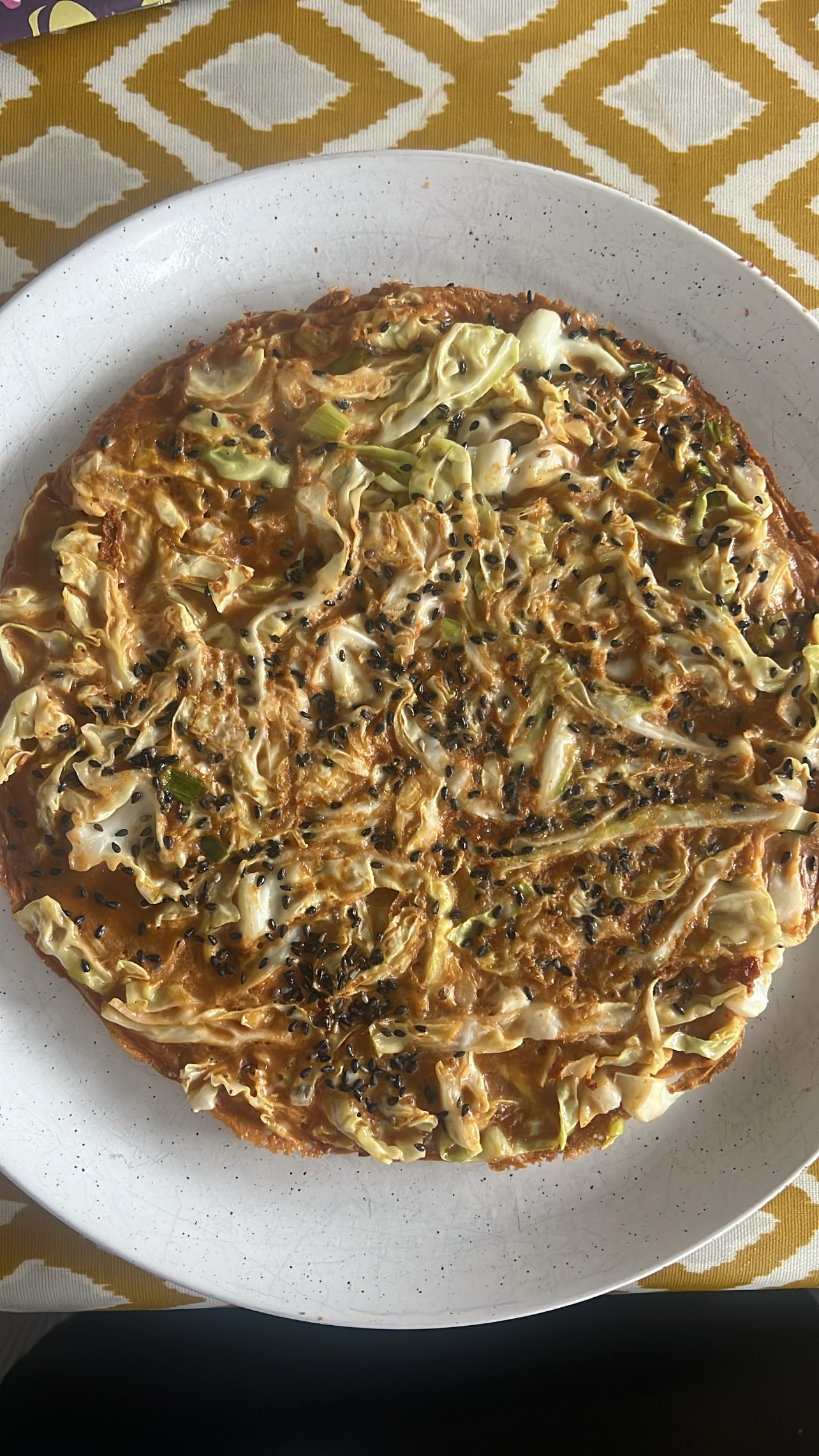
Pic: Those cabbage omelettes. Whisk three eggs with a tablespoon of gochujang and a splash of soy. Saute two chopped spring onions and handful of shredded cabbage, pour egg over, scatter with sesame seeds, a little toasted sesame oil, cook covered until set.
My sister, who followed my lead, is less convinced. She found four whole worms in a head of broccoli. (It was her nanny who discovered them, a horror she shared from the corporate boardroom.) It reminded me that for most people, the food buying drivers haven’t changed: price, taste and convenience rule the roost. You take one or more of those away and it becomes very hard to nudge behaviour or culture in a different (better) direction.
And this is exactly why I’m advising members of the Better Food Traders Network, a UK-wide network championing ethical food retailers who sell locally grown, planet-friendly food. In a session titled “Communicating Food as a Force for Good,” I’ll be sharing my top tips on telling food stories that resonate and not just with the converted. If that’s your thing, or you know someone who might find it useful, you can take a look at the details here.
Do you get a veg box? How do you tackle yours?


Preserving seasonal veg (and celebrating tinned tomatoes)
All this seasonal eating has clearly gone to my head, because I’ve found myself thinking a lot about preserving, too. And there’s no better time to celebrate European tinned tomatoes than when fresh ones aren’t in season.
I was reminded of this at a fabulous dinner organised by ANICAV, the Italian association of canned vegetable industries, with the help of food writer Soha Darwish. It was a proper raise-a-can, glamourous evening at the Mandarin Oriental in honour of their taste, quality and versatility.


Pics: Table buddies Silvana Franco and Reshmi Bennett, who has just launched a new cake in a tin business.
These tomatoes are harvested at their peak and preserved in tins in an industry that dates back to the late 19th century. Italy is the world’s 2nd largest tomato processor (after the US, ahead of China). Some Chinese supplies inflitrated the market creating reputational headaches, and the UK is a huge market. I suspect this prompted the EU-supported nationwide Red Gold From Europe campaign.
Did you know?
Tomatoes came to Europe from Mexico
They were originally thought poisonous and grown as decorative plants
They were popularised in Italy by chef Francesco Leonardi in the late 1800s
They’re packed with lycopene, an antioxidant that reaches its full potential through cooking
If you’re feeling inspired, Good Food’s Samuel Goldsmith has an entire cookbook dedicated to tinned tomatoes. It was lovely to see him, and the great and good of the food writing and judging world, and to make a few new friends along the way.
Saving your sanity this Christmas and beyond
While we’re on the topic of preservation, it’s worth sparing a thought for the humble freezer. For Episode 6, I sit down with corporate time-management expert and six-time bestselling author Suzanne Mulholland, aka The Batch Lady, to explore a whole new approach to batch cooking.
Suzanne has a game-changing raw-prep method and never makes more than two of the same meal. We talked about how to organise the freezer, the problem with freezing random ingredients (hello, chopped celery), what freezes brilliantly and what absolutely doesn’t. I was quite blown away by Suzanne’s Christmas game plan and what she actually puts in the freezes!
If you’re freezer looks anything like mine, and you love a sanity-saving, home-cooking tip, then this podcast is for you.
You can watch on YouTube or listen on Spotify. If you enjoy it, please do subscribe and share.
That’s all from me this week folks! Don’t forget, my upcoming book In Good Taste: What Shapes What We Eat and Drink - and Why It Matters (published by Kristin Jensen of NIne Bean Rows in Jan 2026. It’s available to pre-order already on Waterstones, TJ Jones and Amazon.
Look forward to your thoughts, as always. Thank you for being here.
Can you specify veg you actively don’t want…? If marrows, swede or turnips arrived in my box I would start dry heaving!
I quite enjoy the ritual of cleaning the veg. If you haven’t yet, get a good veg scrubbing brush (OXO do a good one). I try and wash my veg as soon as the bag arrives on a Friday before I put it away, then I’m much more likely to grab the veg when I need it. Love these recipe ideas for using stuff up!